
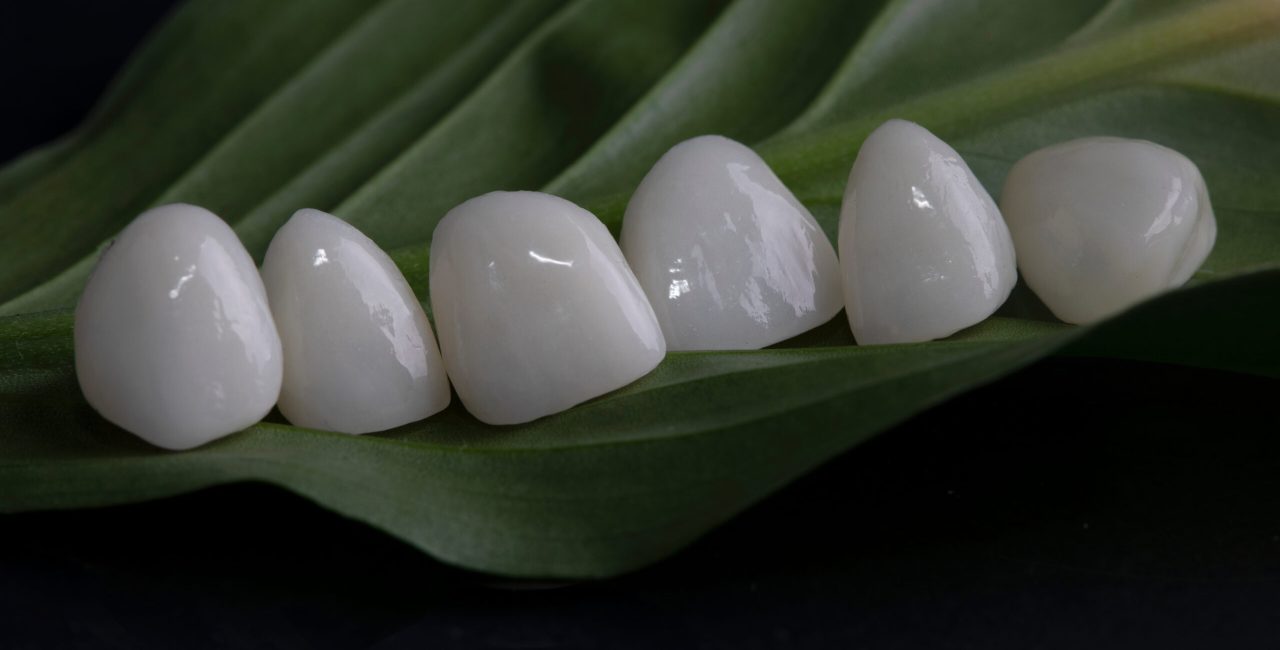
Small chips, spaces between teeth, and uneven tooth shapes can change the appearance of your smile. While these concerns may not always affect your oral health, they can make you feel less confident when you smile or speak. Porcelain veneers offer one cosmetic option for improving several of these imperfections at the same time.
But how exactly do veneers fix chips, gaps, and uneven teeth? Rather than physically moving teeth into a new position, veneers change the visible shape, size, color, and proportions of the teeth. This allows a dentist to create a more balanced and harmonious smile.
What Are Porcelain Veneers?
Porcelain veneers are thin, custom-made shells designed to cover the front surfaces of teeth. They are bonded to the teeth and can be customized to complement your natural tooth color, facial features, and overall smile.
According to the American Dental Association, veneers can improve the appearance of chipped, broken, stained, crooked, or misshapen teeth and can also mask certain gaps between teeth.
Because veneers are individually designed, your dentist can adjust their shape and proportions to address specific cosmetic concerns instead of giving every tooth the same appearance.
How Do Porcelain Veneers Fix Chipped Teeth?
A chipped tooth can have an irregular or shortened edge that stands out when you smile. For a minor cosmetic chip, a porcelain veneer can cover the visible front surface and recreate a smoother, more symmetrical tooth contour.
The veneer is designed to blend with the surrounding teeth in terms of color, shape, and size. This can make the repaired tooth appear more natural while restoring a more even-looking smile.
However, not every chipped tooth is suitable for a veneer. A significant fracture, decay, or weakened tooth may require restorative treatment such as a crown instead. Your dentist can evaluate the condition of the tooth before recommending a cosmetic option.
Can Veneers Close Gaps Between Teeth?
Yes, porcelain veneers can sometimes improve the appearance of small gaps between teeth. Instead of moving the teeth, veneers can be made slightly wider so the space appears smaller or is visually closed.
This approach can be useful when the gap is primarily a cosmetic concern and the surrounding teeth are otherwise healthy. Larger spaces or gaps associated with bite or alignment problems may be better addressed with orthodontic treatment.
It is important to remember that veneers change the appearance of spacing rather than actually repositioning the natural teeth. A dental evaluation can help determine whether veneers, bonding, braces, or another treatment makes the most sense.
How Do Veneers Make Uneven Teeth Look More Balanced?
Teeth can appear uneven because of differences in length, width, shape, or wear. Even subtle variations can affect overall smile symmetry.
Porcelain veneers can be customized to alter the visible contours and proportions of selected teeth. For example, a veneer may make a short-looking tooth appear longer or give a misshapen tooth a more balanced outline.
The goal is not necessarily to make every tooth identical. Good cosmetic dentistry considers the relationship between the teeth, gums, lips, and facial features to create a smile that looks natural rather than overly uniform. Cosmetic dentistry is generally focused on improving smile appearance, balance, and symmetry.
What Is the Porcelain Veneer Process Like?
Treatment typically begins with a consultation and examination to determine whether veneers are appropriate. Your dentist will consider your teeth, gums, bite, existing dental work, and cosmetic goals.
If veneers are recommended, the teeth are prepared as needed, and impressions or digital scans may be used to create custom restorations. The veneers are then checked for fit, shape, and appearance before being bonded to the teeth.
Because some enamel may need to be removed and veneers are generally considered irreversible, it is important to discuss the benefits, limitations, and alternatives with a qualified dentist before treatment.
Frequently Asked Questions
1. Can porcelain veneers fix slightly crooked teeth?
Porcelain veneers can make mildly crooked or misshapen teeth appear more aligned by changing their visible shape. They do not physically move teeth, so significant alignment problems may require orthodontic treatment.
2. Can veneers completely cover a chipped tooth?
Veneers can conceal many minor cosmetic chips by covering the visible front surface of a tooth. Larger fractures or teeth with substantial structural damage may require a crown or another restorative treatment instead.
3. Can porcelain veneers close a small gap?
Yes. A dentist can design veneers to change the apparent width of teeth and reduce the appearance of a small gap. The appropriate treatment depends on the size and cause of the space.